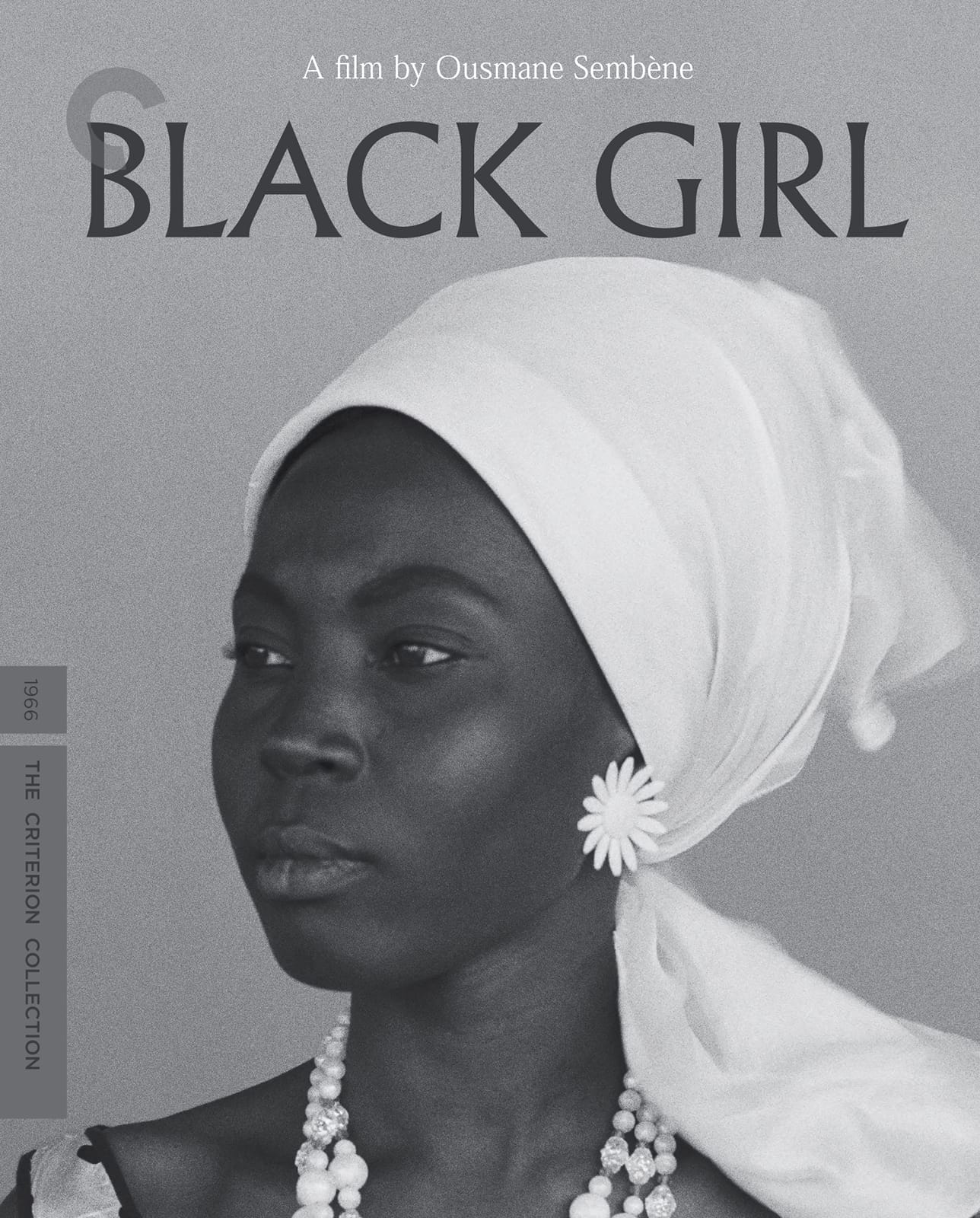
There Is a Senegalese Film From 1966 That Is One of the Fifty Greatest Films Ever Made and Almost Nobody in India Has Seen It — Here Is the Complete Argument for Why That Needs to Change Tonight
Ousmane Sembène's Black Girl is sixty minutes long. It was made for almost nothing. It is shot in black and white with non-professional actors in locations that required no preparation. It is the first feature film made by a Sub-Saharan African filmmaker. It is also a work of such formal precision and moral intelligence that it belongs in the same conversation as any film on the Sight and Sound greatest films list — and its absence from that list tells you everything about whose cinema the critical establishment has decided matters.
Here is what Black Girl is about.
A young Senegalese woman named Diouana is hired as a nanny by a French family in Dakar. The family moves to France and takes her with them, promising her a new life in Europe. In France she discovers that her role has changed — she is not a nanny but a domestic servant, isolated in an apartment in Antibes, doing every form of household labour, rarely leaving the building, never socialised with the family's friends who treat her as a curiosity or an exhibit.
She brought her traditional mask from Senegal and gave it as a gift to the family when she arrived. They hung it on the wall as decoration. It is the film's central symbol — African cultural identity displayed as Western decoration, the specific act of decontextualisation that colonialism performs on everything it touches.
Diouana writes letters to her mother. Her employer intercepts them. The isolation, the dehumanisation, the specific daily violence of a situation in which she has no agency and no exit becomes complete. She stops eating. She stops speaking. She dies.
Sembène adapts this story from his own short story with the formal intelligence of someone who has thought deeply about what cinema can do with the specific experience of colonialism's continuation into the present — not the historical colonialism of conquest and administration but its contemporary continuation in the specific material and psychological conditions of the postcolonial relationship between Africa and France.
What makes it a masterpiece
Black Girl achieves what only the greatest films achieve: it makes the viewer experience, at the level of sensation rather than information, a specific human condition that they would not otherwise have access to.
Sembène's formal choices create this experience with complete precision. He shoots Diouana in the Antibes apartment with tight framing that makes the space feel constricting — the camera rarely moves back far enough to give her room, and the walls are always present at the edge of the frame. The editing in the French sequences is slower than in the Dakar sequences — time moves differently in captivity than in freedom. The sound design uses silence more aggressively in France than in Senegal — the specific silence of social isolation, of a person whose voice is not heard and whose presence is not acknowledged.
The mask — which Sembène films with specific, deliberate attention each time it appears — is the film's moral argument made visual. When Diouana looks at it on the family's wall she is looking at herself — at the version of herself that this family has created, decorative and decontextualised and stripped of everything that made the original meaningful.
The film's final sequence — in which Diouana's former employer returns to Dakar to give her mother the money owed, and is followed by her young brother wearing the mask — is the most precise image of postcolonial continuity in cinema. The employer cannot understand what the child is doing. He cannot understand because understanding would require acknowledging what he has done. He runs from the child. The child follows. The film ends without resolving what the child following represents — the persistence of what cannot be escaped? the haunting of the guilty? the reclamation of what was taken? Sembène leaves it open, in the way that only a filmmaker who trusts his images completely would leave it.
Why it is not in the canon — the honest account
Black Girl is absent from most canonical lists for reasons that have nothing to do with its quality and everything to do with the mechanisms of cultural distribution and critical authority.
The Sight and Sound poll is conducted among approximately two thousand film critics and directors. The majority are from Europe, North America, and East Asia. The critical infrastructure that supports African cinema — the publications, the academics, the institutional frameworks that evaluate and preserve films — is a fraction of the size of the equivalent infrastructure for European or American cinema. Films from Burkina Faso, Senegal, Mali, and Mozambique are seen by fewer critics, written about in fewer publications, shown in fewer venues, and therefore appear less frequently in the critical consciousness from which canonical lists are assembled.
This is not a conspiracy. It is a structural condition — the result of decades of unequal investment in the cultural infrastructure that determines which films are taken seriously and which are not. The remedy is not a political adjustment to canonical lists but the creation of the critical attention that makes African cinema visible to the global cinephile community.
Publications like Republic of Cinema have a specific responsibility in this regard. Every serious film website that covers only European, American, East Asian, and Indian cinema is replicating the structural exclusion that keeps African cinema invisible. Every publication that covers African cinema seriously — that sends the signal that these films deserve the same quality of critical attention as any other national cinema — is contributing to the infrastructure that the films need.
Black Girl is sixty minutes long. It is available through the Criterion Collection with a VPN and through careful searching elsewhere. It will take one hour of your evening. That hour will permanently expand what you believe world cinema is and permanently change your understanding of what the word masterpiece means. The only reason you have not already seen it is that nobody told you it existed. Now you know. Watch it tonight.
💬 Discussion
0 comments