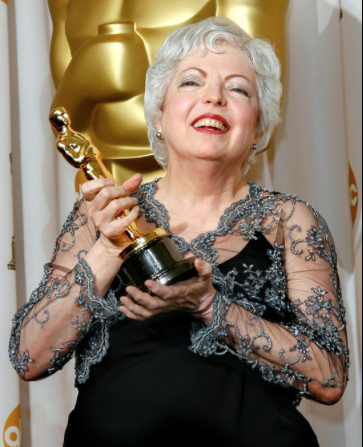
Thelma Schoonmaker Has Edited Every Martin Scorsese Film Since Raging Bull — Here Is the Complete Account of What She Brings That Scorsese Cannot Bring Himself, and Why the Films Would Not Be the Films Without Her
The auteur theory gives the director full creative credit for their films. It is therefore constitutionally unable to account for Thelma Schoonmaker — a collaborator whose specific creative contribution to the films she has edited is as responsible for their emotional and rhythmic experience as any decision Scorsese made on set. This is not a diminishment of Scorsese. It is a recognition that the best films are made by specific creative relationships rather than by single geniuses.
Begin with the specific thing Schoonmaker does that Scorsese cannot do for himself.
Scorsese is one of the most emotionally volatile directors in American cinema. His films are driven by an intensity of feeling — about masculinity, about guilt, about violence, about the specific quality of Catholic shame and secular ambition — that is both the source of their power and, unmediated, a potential source of their weakness. Intensity without control produces films that overwhelm rather than move, that assault rather than engage.
Schoonmaker is the control. Not in the sense of dampening the intensity — the Scorsese films she has edited are among the most intensely felt American films of their era. But in the sense of shaping that intensity — finding the rhythm within it, making its peaks more effective by establishing the valleys before them, ensuring that the emotional extremity of the most intense sequences is earned by the specific quality of what preceded them.
The editing of Raging Bull is the most complete demonstration of this function. The fight sequences — shot by Scorsese in slow motion, in extreme close-up, with a visual intensity that has no precedent in boxing cinema — are separated by sequences of domestic life that Schoonmaker edits with a patience and a quietness that is the polar opposite of the ring sequences. The violence is more violent because of the quietness. The quietness is more significant because of the violence. The editing creates a rhythmic argument — that Jake La Motta's life in the ring and his life outside it are the same life, driven by the same impulse, destroying the same things — that neither the fight sequences nor the domestic sequences could make alone.
What rhythm in editing actually means
Rhythm in editing is not simply the pace of the cuts — how frequently the editor changes the image. It is the relationship between the pace of the cuts and the emotional tempo of the material being cut — the degree to which the cutting rhythm serves or undermines what is happening in the scene.
Schoonmaker's rhythmic intelligence is what distinguishes her from editors who can cut quickly and editors who can cut slowly but cannot do both with equal mastery and move between them with the precision that a scene's emotional logic requires.
In the Copacabana sequence of Goodfellas — the famous long take that follows Henry Hill and Karen through the back entrance of the club — Schoonmaker makes one of the most important editing decisions in the film by making no cutting decision at all. The four-minute unbroken take is the right choice not because long takes are aesthetically superior to edited sequences but because the specific emotional experience the sequence needs to create — the feeling of being carried through a glamorous world without resistance, of money and power removing all obstacles — requires the specific quality of continuous movement that only an uncut sequence provides. Schoonmaker understood that the edit here was to not cut.
In the Layla sequence that closes the same film — the morning after the Lufthansa heist, the bodies discovered across New York — Schoonmaker edits to the specific tempo of Eric Clapton's piano playing in a way that creates a relationship between image and music that is not simply illustrative but structural. The editing rhythm and the musical rhythm are not synchronized at a simplistic level. They are in conversation — sometimes aligned, sometimes slightly displaced — in a way that gives the sequence a specific quality of ironic distance, of beauty and horror coexisting in a relationship that neither cancels the other.
The specific intelligence of the late Scorsese films
Schoonmaker's work on the later Scorsese films — The Aviator, The Departed, The Wolf of Wall Street, Killers of the Flower Moon — demonstrates a different kind of intelligence from the formal virtuosity of her earlier work.
The later films are longer and more complex than the earlier ones — narratively denser, with larger casts and more sustained narrative arcs. The editing intelligence they require is less the shaping of intensity and more the management of narrative complexity — the maintenance of multiple character arcs across long running times, the modulation of pace across films that need to sustain attention for three or more hours, the specific decisions about what to compress and what to extend that determine whether a long film feels long or feels complete.
The Wolf of Wall Street is the most extreme test of this intelligence. Three hours of a film about excess that is itself in excess — more information, more characters, more incident, more performance than any conventional running time could contain. Schoonmaker's editing of this material is the most technically demanding work of her career: the maintenance of a specific quality of manic energy across a running time that most editors would have broken under, the modulation between sequences of pure comedy, sequences of real horror, and sequences that are both simultaneously.
Thelma Schoonmaker is seventy-nine years old. She has edited fifteen Scorsese films across forty-five years. She has won three Academy Awards for editing. She is the most important film editor working in American cinema and one of the most important creative collaborators in the history of the form. The Scorsese films belong to Scorsese. They also belong to her. The auteur theory does not have adequate language for this. The films exist and that is more important than the theory.
💬 Discussion
0 comments