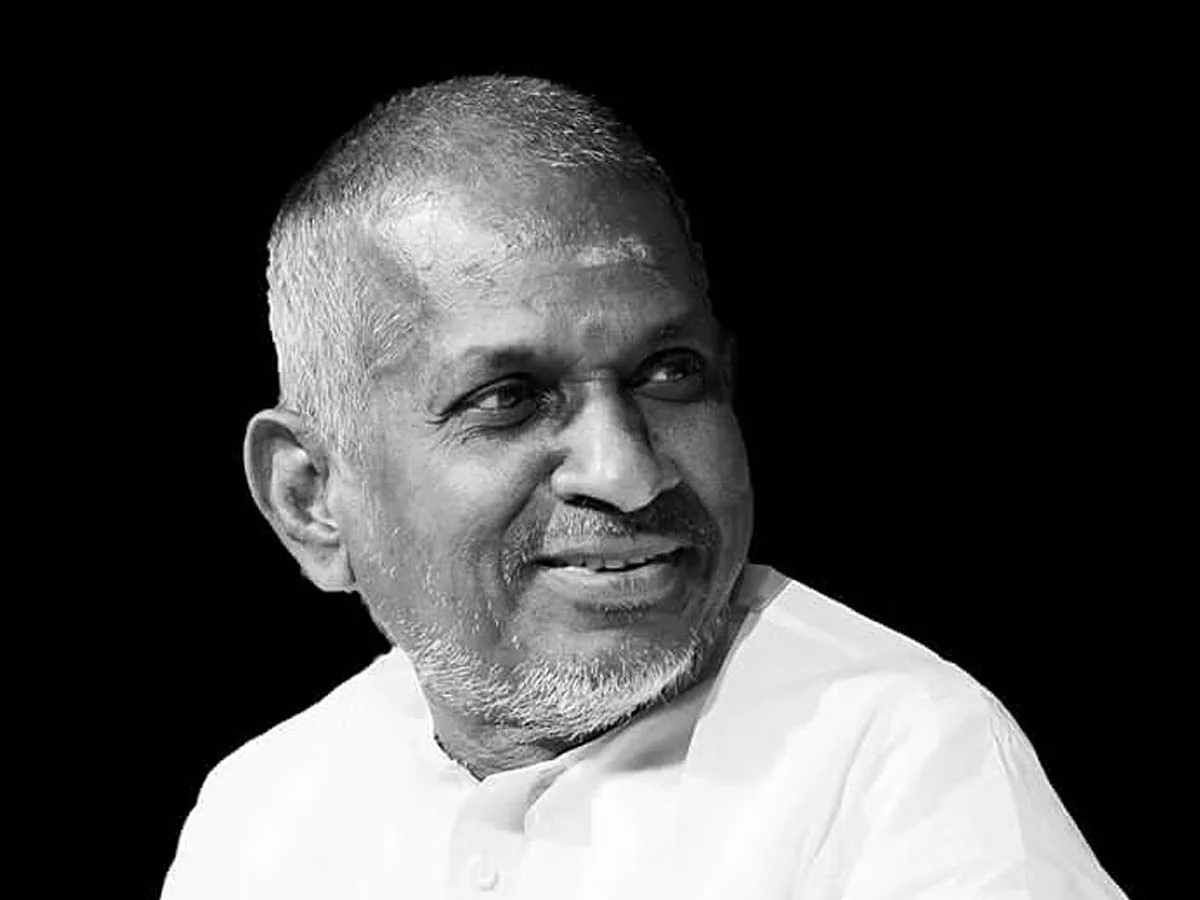
Ilayaraja Composed Music for Over a Thousand Films and Created the Most Complete Sonic Universe in the History of Indian Cinema — Here Is the First Serious Attempt in English to Map What That Universe Contains
Ilayaraja is the most important figure in the history of Indian film music. Not the most celebrated — A.R. Rahman has more international visibility and more industry recognition. Not the most commercially dominant — many composers have had more hits in specific eras. But the most important, in the specific sense of having made the most original and the most philosophically coherent contribution to the form. This is the argument for that claim.
Begin with the fact of the output, because it is so extraordinary that it requires acknowledgment before analysis.
Between 1976 and the present day, Ilayaraja has composed music for over a thousand films. The sheer quantity is staggering and would, in most cases, be a signal of commercialisation rather than seriousness — the prolific output of a studio craftsman rather than an artist. In Ilayaraja's case it is neither a signal nor a problem. The thousand films contain, distributed across them, a body of musical invention of such scope and such originality that the quantity is not a dilution of quality but an expression of it — the record of a mind so continuously productive that it has been generating new musical ideas for forty years without apparent exhaustion.
This is the first thing to understand about Ilayaraja: the productivity is genuine. The thousand films contain a thousand different scores, each responding to the specific emotional and dramatic demands of the specific film, each bringing something that was not there before.
What he invented — the specific musical contribution
Ilayaraja's formal contribution to film music is the synthesis of Western classical composition with Carnatic classical music and Tamil folk music traditions in a way that created something that was not simply a hybrid of its sources but a genuinely new musical language.
This synthesis was not unprecedented in Indian film music — the great composers of the golden era of Hindi film music, from S.D. Burman to Shankar-Jaikishan, all worked at the intersection of Western and Indian classical traditions. What Ilayaraja did differently was work from the inside of both traditions simultaneously rather than drawing on each selectively.
His formal training is in Western classical composition — he studied at the Trinity College of Music, London, and his understanding of Western harmony, counterpoint, and orchestration is complete rather than approximate. His understanding of Carnatic music is equally deep — not the theoretical understanding of an academic but the lived musical knowledge of someone who grew up inside the tradition. And his knowledge of Tamil folk music — the specific rhythmic and melodic patterns of rural Tamil Nadu — is not scholarly but organic, absorbed from the specific cultural environment he came from.
The synthesis of these three traditions produces music that operates simultaneously on multiple registers. A melody that is Carnatic in its ornamentation and modal character, harmonised in ways that are Western in their chord progressions, set against rhythmic patterns that are folk in their character and orchestrated with a complexity that is purely classical. The listener who comes from within any of these traditions finds something familiar. The listener who is hearing the combination for the first time finds something that has no name because it has no precedent.
The films — what each major period reveals
The early period — roughly 1976 to 1985 — is the period of discovery. Ilayaraja is developing the language, testing what the synthesis can do, finding the specific applications of his formal approach to the specific demands of Tamil, Telugu, and Malayalam film.
The films of this period include Nool Veli, Ninaithale Inikkum, and the series of collaborations with Balu Mahendra and K. Balachander that established his reputation. The music in these films is sometimes formally rough — the synthesis not yet fully worked out — but it contains moments of extraordinary invention that are recognisably the beginning of what will become a complete musical language.
The middle period — roughly 1985 to 1992 — is the period of mastery. The language is complete and Ilayaraja uses it with the freedom of someone who has fully internalised their vocabulary. Mouna Raagam, Nayakan, Geethanjali, Roja (before Rahman's takeover of his own score) — these films contain the most consistently achieved music of his career.
The Mani Ratnam films of this period are the most important single body of work in this middle period. Mouna Raagam (1986) and Nayakan (1987) are the films that most completely demonstrate what Ilayaraja's music can do when it is in collaboration with a director who understands what it is doing — who uses the score as a structural element of the film's emotional architecture rather than as a decorative layer over a completed narrative.
The score of Nayakan is the most complete demonstration of Ilayaraja's specific genius. The film follows Velu Naicker across decades of criminal life, and Ilayaraja's score follows him — not with themes that identify characters in the conventional way but with a musical language that evolves across the film's timeline, that carries the weight of accumulated experience, that sounds like the specific quality of a life that has been lived at a cost.
The late period — from the mid-1990s to the present — is more uneven. Ilayaraja's relationship with the Tamil film industry became complicated after A.R. Rahman's emergence in the early 1990s — not because Rahman displaced him in terms of output but because the industry's taste shifted toward a different kind of musical sophistication that was more immediately accessible and more internationally legible.
But the late period also contains some of his most formally ambitious work — his film scores that are also symphonic compositions, his work with Western orchestras on concert recordings of his film music, his continued output of occasionally extraordinary film scores alongside the more routine work.
The comparison with Rahman — honest and specific
The comparison between Ilayaraja and A.R. Rahman is the most discussed question in Indian film music and the one most consistently discussed unproductively — as a tribal argument between fans rather than as an analytical question about two different kinds of musical achievement.
The honest comparison requires acknowledging that they are doing different things and that both things are genuine achievements.
Rahman's achievement is the democratisation of sonic sophistication — the making available of musical textures and arrangements that were previously accessible only to audiences with classical training, packaged in forms that could reach mass audiences in India and internationally. Roja, Bombay, Lagaan, Slumdog Millionaire — these scores brought a musical intelligence to Indian popular cinema that had not previously been accessible at that scale.
Ilayaraja's achievement is the creation of a complete musical language — a synthesis so deep and so consistently realised that his best work does not simply provide a soundtrack to a film but creates a sonic world that the film inhabits. The distinction is between music that serves the film and music that constitutes the film's emotional reality.
Both achievements are real. Neither negates the other. The argument about which is greater is less interesting than the understanding of what each achieved — and than the recognition that Ilayaraja's contribution, specifically, is the most formally original and the most philosophically coherent body of Indian film music composition ever produced. That recognition is what this piece is making the argument for. The argument is available to anyone who listens seriously to the work.
💬 Discussion
0 comments